Clynce Support
Online
Clynce Support
Thinking of hiring a cleaner through Facebook or a friend's recommendation? Here's what the data says about the risks, and the safer alternative.
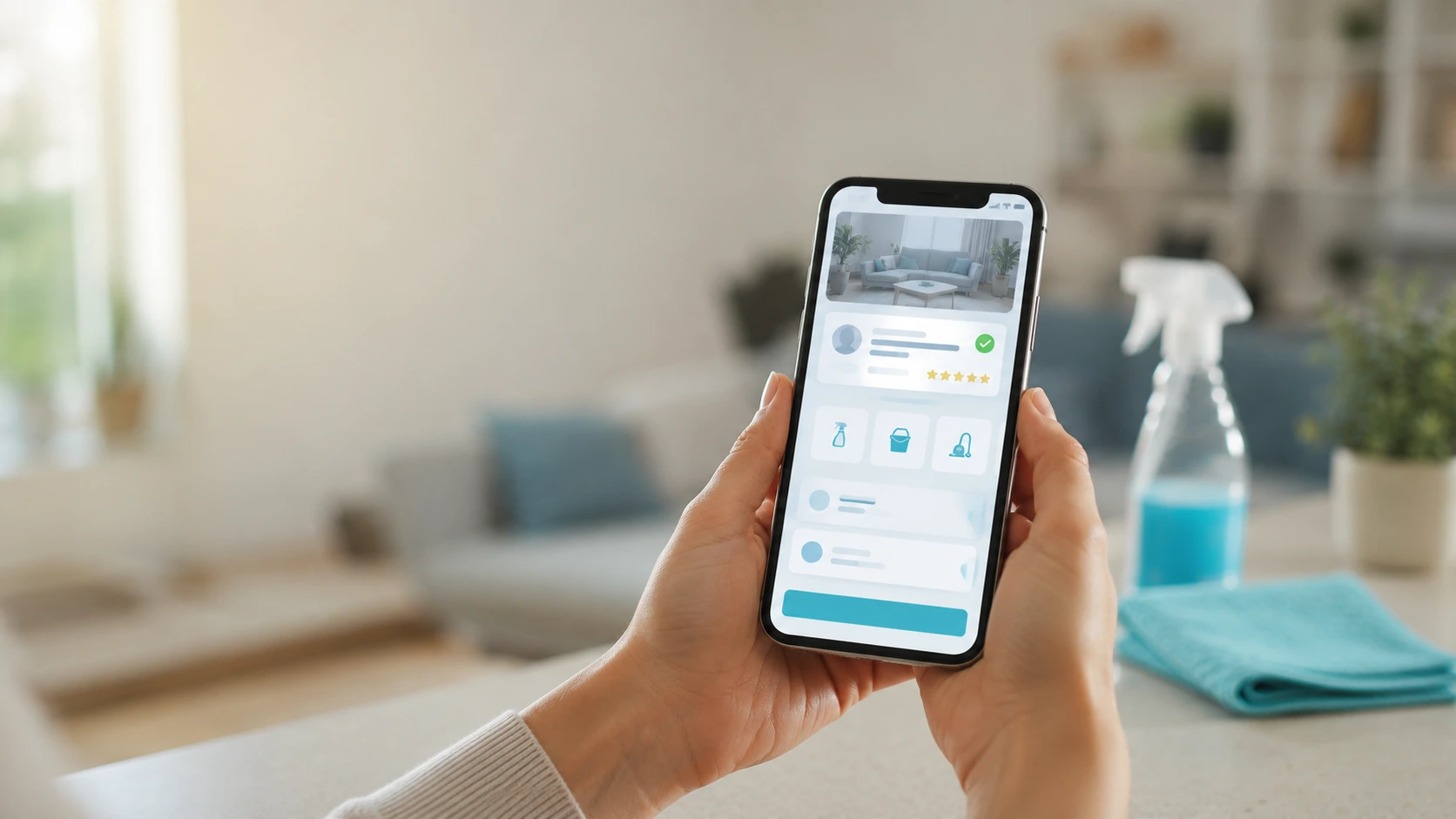
Ask ten Australians how they'd go about finding a cleaner, and you'll probably hear some version of the same three answers: "I'd post in a local Facebook group," "I'd ask a friend who they use," or "I'd just look one up online." All three feel reasonable. All three feel low-risk, because they're familiar.
But familiar isn't the same as safe, and the way most people are currently finding cleaning services in Australia has a few blind spots that don't get talked about much — until something goes wrong.
This isn't a scare piece. Most cleaners, whether found on Facebook, through a mate, or via an app, are honest people doing a normal job. But there's a meaningful difference between hoping that's true and actually knowing it, and that difference comes down to how you found them in the first place.
The Three Ways Australians Actually Find a Cleaner Today
Before comparing them, it's worth being honest about what each option actually offers:
- Facebook groups and community marketplaces are free, immediate, and full of options. You post "looking for a cleaner in [suburb]" and within an hour you've got five people in your comments or DMs.
- Word of mouth feels like the gold standard — if a friend or neighbour vouches for someone, that carries real weight. Nobody recommends a bad experience on purpose.
- Verified platforms are the newest option, built specifically around the idea that trust shouldn't be something you have to figure out yourself, job by job.
Each of these solves the "where do I find someone" problem. Only one of them also solves the "can I actually trust this person?" problem — and that second question matters a lot more once someone has a key to your house.
The Real Risk Behind Facebook and Community Group Listings
This is the part that doesn't get said often enough: online marketplaces and social platforms have become one of the most common places Australians lose money to scams, and cleaning and home service listings sit squarely inside that risk category.
According to the ACCC's National Anti-Scam Centre, Australians lost roughly $2.18 billion to scams in 2025 alone, with online marketplace fraud making up a significant share of that figure. Separately, the Centre reported that scams initiated through online contact methods — marketplace listings, social platforms, and apps — accounted for $122 million in losses in just the first nine months of 2025, with fraud investigators noting that organised groups, not lone opportunists, are increasingly behind this activity.
It gets more specific closer to home. A NSW Fair Trading release marking Scams Awareness Week found that more than 40% of scam reports the department received in the past year involved impersonation attempts specifically on platforms like Facebook Marketplace and WhatsApp — the exact channels people use to arrange casual services like cleaning. The same release noted that shopping and service-related scams were the single most reported category with financial loss, and that NSW residents alone lost more than $48 million to scams in a single year.
To be clear: this doesn't mean every cleaner in a Facebook group is a scammer. It means the category — informal, unverified arrangements made through social platforms — is genuinely one of the higher-risk ways to transact in Australia right now, and cleaning services aren't exempt from that just because the stakes feel lower than buying a used car.
The practical problem is simpler than fraud, too. A Facebook listing tells you almost nothing verifiable: not whether the person is insured, not whether "Sarah's Cleaning Co." is an actual registered business, and not what happens if something in your home gets damaged while they're working. You're taking their word for all of it.
Why Word-of-Mouth Isn't as Safe as It Feels
Word-of-mouth referrals feel bulletproof because they come from someone you trust. But the trust you have in your friend doesn't automatically transfer to information about the business itself. A few things a referral quietly skips over:
- Timing. Your friend booked them eight months ago. Has the business changed hands, lost staff, or let their insurance lapse since then? You have no way of knowing.
- Verification. Your friend almost certainly didn't check the business's ABN or insurance status — they just had a good experience and assumed everything behind the scenes was in order.
- Sample size. One good experience is one data point, not a track record. Even reliable businesses have off days; a single referral can't show you the pattern.
- No formal recourse. If something goes wrong, your options are limited to an awkward conversation, not a documented dispute process.
None of this means don't trust your friend's judgement. It means a referral is a good starting point, not a substitute for actually checking the things that matter.
This is where the comparison stops being about convenience and starts being about substance. A properly built cleaning marketplace isn't just a prettier version of a Facebook group — it changes what's actually being checked before you ever see a listing.
- Insurance and licensing are confirmed upfront, not taken on faith after the fact.
- Business identity and ABN are validated, so "Sarah's Cleaning Co." is a real, registered entity, not just a name on a profile.
- Reviews are aggregated and attached to a verified business, not scattered across screenshots and hearsay.
- Multiple quotes are comparable side by side, so you're pricing the job properly instead of accepting the first number you're offered.
- There's a documented paper trail — quotes, invoices, and messages — if a dispute ever needs to be resolved.
- A formal support channel exists if something does go wrong, rather than your only option being to stop replying to a phone number.
How the Three Options Really Compare
Laid out plainly, side by side, the gap becomes obvious:
Facebook and Community Groups
- Insurance: rarely confirmed, self-reported only
- Business identity or ABN: rarely verified
- Reviews: scattered and largely unverifiable
- Comparing quotes: manual, one message at a time
- Dispute process: none
- Payment trail: often cash, no record kept
Word of Mouth
- Insurance: rarely checked at all
- Business identity or ABN: rarely verified
- Reviews: limited to one or two personal accounts
- Comparing quotes: limited to those you already know
- Dispute process: none
- Payment trail: often cash, no record kept
Verified Platform
- Insurance: checked before the business can list
- Business identity or ABN: checked before the business can list
- Reviews: aggregated and tied directly to the business
- Comparing quotes: side by side, in minutes
- Dispute process: formal support channel available
- Payment trail: documented invoice history
When Word-of-Mouth Still Makes Sense
This isn't an argument to abandon referrals altogether. If a friend recommends a cleaner, that's a genuinely useful signal — it just shouldn't be the only check you run. Take the recommendation, then do the same thirty seconds of due diligence you'd want to do for anyone: confirm their ABN through the free government ABN Lookup tool, ask about insurance directly, and see if they have any reviews beyond your friend's word. A good referral that also checks out independently is the best of both worlds.
The Local Reality: Perth, Sydney, Melbourne, and Beyond
Where you live actually changes your risk profile here. Fraud monitoring from Bank Australia's customer protection team has found that scam reports tied to online marketplaces and buy/sell activity are highest in NSW, Victoria, and Queensland — a pattern the bank attributes directly to those states having the heaviest use of online marketplaces overall. In other words, the bigger the city, the bigger the pool of listings — and the bigger the pool of people trying to exploit that same convenience.
That doesn't mean Perth, Adelaide, or regional Australia are exempt. It means that wherever you are, the volume of casual online listings for services like cleaning has grown fast enough that verification has stopped being optional — it's just become part of hiring sensibly, the same way checking a tradesperson's licence became normal for anything bigger than a cleaning job.
How to Make the Switch Without Overthinking It
If all of this sounds like more effort than posting in a Facebook group, the good news is that it isn't, once the checking has already been done for you. This is essentially the gap that platforms like Cleynce were built to close: post your cleaning job once, and quotes come back from businesses that have already had their insurance, licensing, and identity checked, each with a visible review history and a verified badge sitting right next to their price. Comparing three properly vetted quotes takes a few minutes instead of a few phone calls, and if anything does come up after the job, there's an actual support channel rather than a message left on read.
Whether you end up using a platform like that, going with a trusted referral you've independently checked, or sticking with a Facebook group with your eyes open, the goal is the same: know who's coming into your home before they get there, not after.
A Final Thought
Hiring a cleaner shouldn't feel like a leap of faith, and for most of Australia's history of doing this casually — through classifieds, community boards, and now Facebook groups — it has been. The tools to actually verify who you're letting into your home have existed for a while now; they've just never been the default. That's changing, not because the old ways were reckless, but because there's simply a better way to know, rather than hope.
Written by
Unika Subedi

Trust and Safety · 9/18/2026
A Research-Backed Look at What's Actually in Your Home's Air, and How Cleaning Choices Genuinely Affect Dust, VOCs, and Ventilation in Perth Homes
Unika Subedi

Trust and Safety · 9/17/2026
A Research-Backed Look at the Genuine Link Between a Tidy, Clean Home and Reduced Stress, Beyond the Popular Wellness Claims
Unika Subedi
Trust and Safety
Share your cleaning requirement in minutes, compare verified providers near you, and pay only for the service you choose.
Fast onboarding
Sign up, set preferences, and start in minutes.
Built for Growth
Whether it's a single booking or multiple sites, manage cleaning requests with ease.
Simple, Practical Habits That Keep a Pet-Owning Home Fresher Between Scheduled Cleaning Visits
Unika Subedi