Clynce Support
Online
Clynce Support
What Actually Happens in Your House While You're Out, the Real Safeguards Behind a Verified Cleaner, and How to Decide What Feels Right for Your Own Home
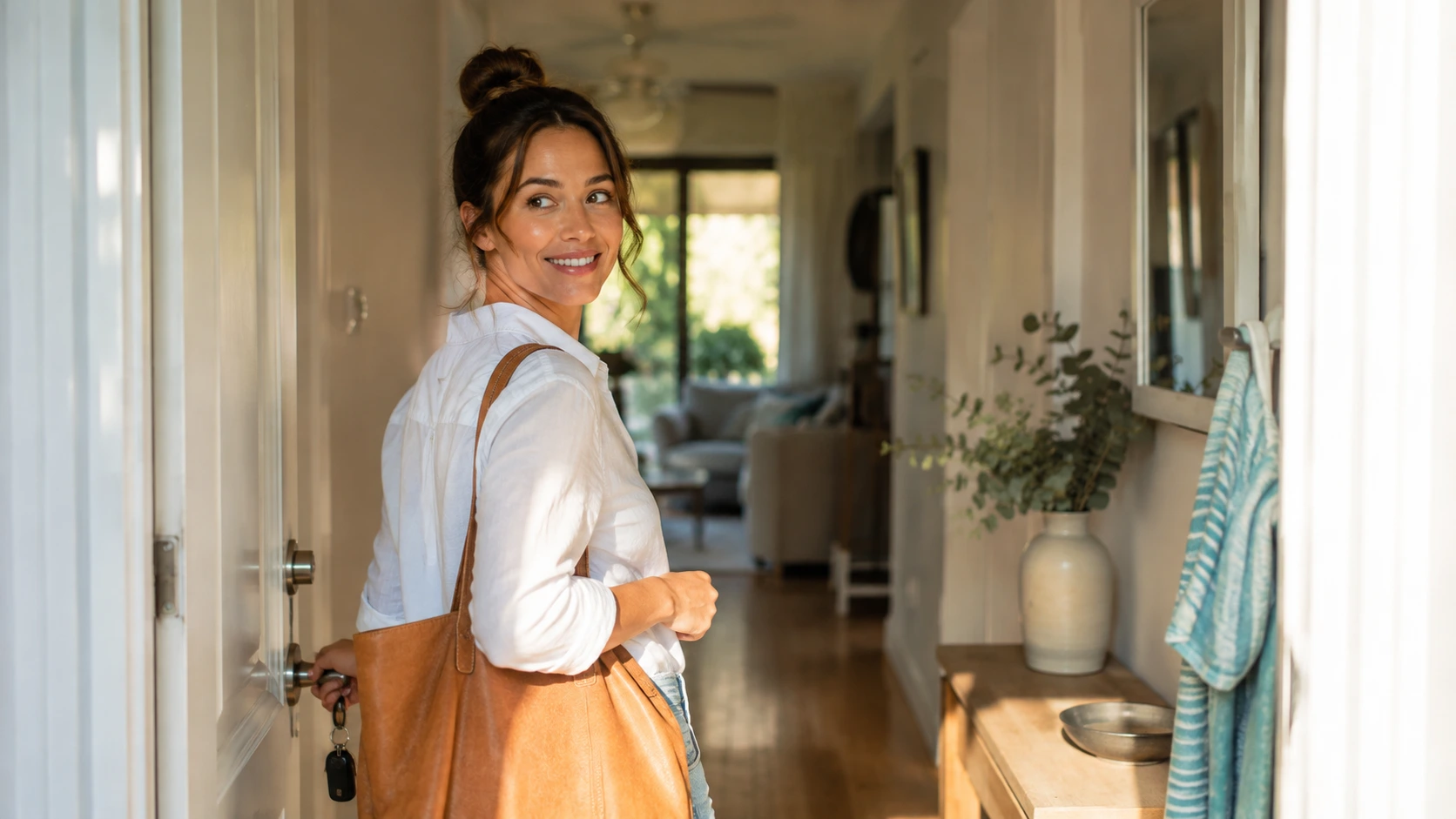
It's one of the first things almost everyone thinks before booking their first professional clean, and almost nobody says out loud: "Am I actually supposed to let a stranger into my house while I'm not there?" It feels like an odd thing to ask a cleaning company directly, so most people either take an unpaid morning off work to supervise a two-hour clean, or quietly decide professional cleaning "isn't for them" without ever really answering the question.
It's a completely reasonable thing to wonder about. It's also a lot more straightforward than it feels — once you know what actually protects you, what most people do, and how to decide what's genuinely comfortable for your own home.
The Short Answer: No, you don't have to be home. The vast majority of regular cleaning bookings in Australia happen with the client at work, running errands, or simply out for the morning. What makes that comfortable isn't blind trust — it's a handful of specific safeguards worth understanding before your first booking.
The comfort of leaving a cleaner alone in your home doesn't come from assuming everything will be fine. It comes from a few concrete things that are worth checking before you book anyone, professional platform or not.
● Police checks: A National Police Check, coordinated through the Australian Criminal Intelligence Commission, is standard practice for reputable cleaning businesses and confirms a cleaner has no relevant criminal history before they're ever sent into someone's home.
● Public liability insurance: Legitimate cleaning businesses carry public liability insurance, which covers you financially if something is damaged during a clean — a basic sign the business is run properly, not just cheaply.
● Verified reviews from real past clients: A long, genuine review history says more about how a business behaves in someone else's home than any single conversation on the phone ever could.
● A registered, checkable business: A business with an ABN, a real trading history, and a public profile has a great deal more to lose by behaving badly than an unverified individual found through a classifieds ad.
🔬 Research: Cleaning businesses across Australia are increasingly expected to carry public liability insurance and use police-checked staff as a baseline standard, particularly for any work carried out inside private homes — and reputable operators treat this as non-negotiable, not an optional extra.
✅ Good to Know: None of these safeguards require you to ask an awkward question on the phone. On Cleynce, verified credentials, insurance status, and full review history sit directly on every business's profile — the vetting has already been done before you ever send an enquiry.
If you won't be home, you still need a way for the cleaner to get inside. There's no single right answer here — it comes down to what you already have and what you're comfortable with.
Method | Best For | Worth Knowing |
Lockbox with a code | Most households, especially recurring bookings | Cheap, simple, and the code can be changed any time — a popular default for a reason |
Smart lock / keypad entry | Homes that already have one installed | No physical key ever changes hands, and access can be set for a specific time window |
A spare key held by the business | Trusted, long-term recurring cleaners | Only sensible once a genuine track record with that specific cleaner is established |
Building manager or concierge | Apartments and units with front-desk access | Removes the key question entirely — the cleaner checks in and out through the building |
Someone else lets them in | A family member, neighbour, or property manager nearby | Useful for a first clean, though it adds a scheduling dependency for every future visit |
💡 Simple Rule of Thumb: For a first clean with a new business, many people choose to be home — or have a friend or family member let the cleaner in — simply to meet them once and walk through any specific instructions. After that, a lockbox or smart lock is usually all that's needed for every visit going forward.
A professional clean, whether you're home or not, follows a fairly predictable rhythm — and knowing what to expect removes most of the uncertainty.
● Arrival and departure updates: Most businesses notify you when the cleaner arrives and again when the job is finished, so you're never left wondering what's happening in your own home.
● A fixed, agreed scope: The cleaner works from the job description and any notes you've provided — they're not deciding on the day what does or doesn't get done.
● Before-and-after documentation: Many businesses provide photos or a completion report once the job is done, particularly useful the first few times while trust is still being built.
● No wandering beyond the brief: A professional cleaner sticks to the rooms and tasks agreed in the quote — bedrooms, drawers, or areas outside the scope simply aren't touched.
📌 Worth Knowing: It's completely normal, and genuinely sensible, to put away small valuables, prescription medication, and anything irreplaceable before any tradesperson visits your home unsupervised — not because it signals distrust, but because it's good practice with any service provider, cleaner or otherwise.
Times It's Worth Being There
● First-ever clean with a new business: so you can walk through specific instructions, trouble spots, and how you like things done.
● Unusual access: if entry genuinely requires you to be present — no lockbox, no building manager, no spare set of keys anywhere.
● Pets that need managing: a nervous dog or a cat that bolts for the door is often easier to handle with you there the first time.
● You simply prefer it: some people just like being home for a clean, and that's a perfectly valid reason on its own — no justification required.
Times It's Genuinely Fine to Be Away
● Recurring bookings with the same cleaner: once a routine and a level of trust are established, most regular clients are out at work for every visit.
● A clear, detailed job description: if the scope and instructions are specific, there's little the cleaner needs to check with you in person.
● A verified, well-reviewed business: the vetting that matters most has already happened before booking day.
Is it actually safe to leave a cleaner alone in my house?
For a verified, insured, police-checked business with a genuine review history, yes — this is how the large majority of recurring cleaning bookings already happen across Australia. The safety comes from the vetting done before booking, not from being present during the clean itself.
What if something goes missing or gets damaged?
This is precisely what public liability insurance exists for. A reputable business will have a clear process for reporting and resolving any issue — it's worth confirming a business is insured before booking, exactly as you would with any tradesperson entering your home.
Should I lock away valuables before the cleaner arrives?
It's sensible practice, and most experienced clients do it as a habit — not as a signal of distrust, but the same way you'd tidy away anything important before any tradesperson visits unsupervised.
What if I have a pet at home?
Let the business know in advance so the cleaner isn't caught off guard, and consider being home for the first visit if your pet is anxious around strangers. Most cleaners are used to working around pets and will follow whatever instructions you leave — a shut door, a crate, or a designated pet-free zone.
Do I need to leave written instructions if I'm not home?
It helps, particularly for the first booking. A short note on anything fragile, off-limits, or done a specific way removes almost all of the guesswork — after that, most clients find a quick message through the platform is all that's needed for future visits.
● Confirm insurance and police checks: look for this directly on the business's profile rather than asking outright over the phone.
● Read the review history, not just the star rating: look for mentions of trust, reliability, and how the business handles a home when the client isn't there.
● Choose an access method you're comfortable with: a lockbox or smart lock is the simplest starting point for most households.
● Leave a short, specific note: anything fragile, off-limits, or done a particular way, especially for the first visit.
● Put away small valuables and medication: sensible practice with any service provider, not a judgement on any individual cleaner.
There's no rule that says you have to be home, and there's no rule that says you shouldn't be, either. The right answer is whichever one lets you actually get on with your day — and that comes down to knowing the business you've booked has been properly vetted, not to standing in your own kitchen watching someone mop the floor.
On Cleynce, every business profile shows verified insurance status, police check confirmation, and a full history of real client reviews before you ever send an enquiry — so deciding whether to be home becomes a genuine preference, not a leap of faith.
Written by
Unika
Trust and Safety · 9/18/2026
A Research-Backed Look at What's Actually in Your Home's Air, and How Cleaning Choices Genuinely Affect Dust, VOCs, and Ventilation in Perth Homes
Unika Subedi

Trust and Safety · 9/17/2026
A Research-Backed Look at the Genuine Link Between a Tidy, Clean Home and Reduced Stress, Beyond the Popular Wellness Claims
Unika Subedi
Trust and Safety
Share your cleaning requirement in minutes, compare verified providers near you, and pay only for the service you choose.
Fast onboarding
Sign up, set preferences, and start in minutes.
Built for Growth
Whether it's a single booking or multiple sites, manage cleaning requests with ease.
Simple, Practical Habits That Keep a Pet-Owning Home Fresher Between Scheduled Cleaning Visits
Unika Subedi