Clynce Support
Online
Clynce Support
The Real Cleanliness Standard You're Legally Held To at Final Inspection, the Areas That Cause the Most Disputes, and Why a Professional Cleaning Receipt Is the Strongest Evidence You Can Have
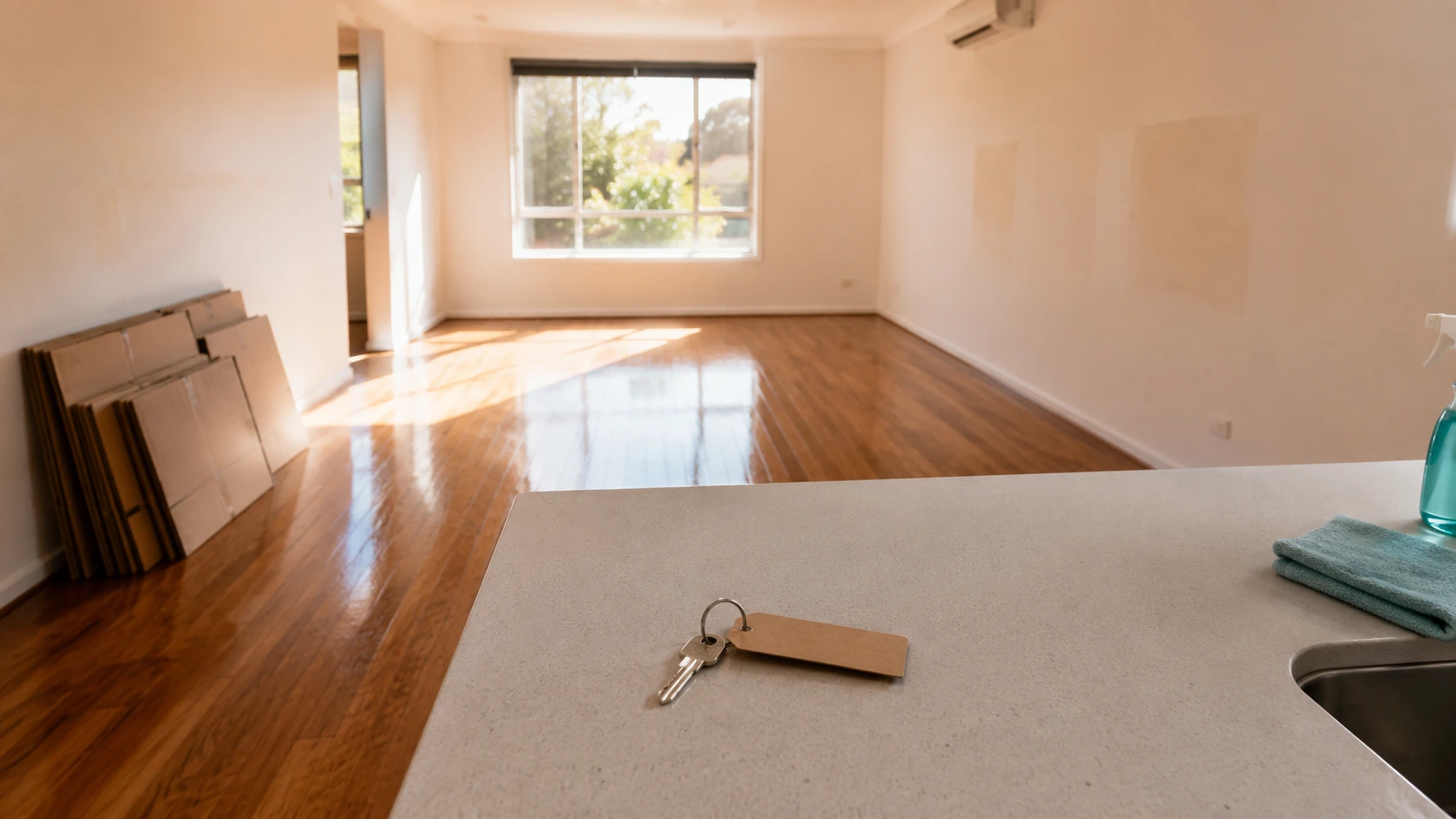
Somewhere in the chaos of moving boxes, disconnecting the internet, and updating your address on everything, there's a quieter worry sitting underneath it all: is the property clean enough to get the bond back? It's a genuinely reasonable thing to stress about — cleaning is consistently the single most common reason property managers make deductions from a tenant's bond in Australia, more than damage, more than unpaid rent, more than anything else.
The good news is that exactly what's being checked, and exactly what you're legally required to do, is far more knowable than it feels in the middle of a move. Here's what actually matters.
The Short Answer: You're generally required to leave the property in a "reasonably clean" state — comparable to how it was at the start of the tenancy, fair wear and tear excepted — not necessarily a forensic, professional-grade clean, unless your lease specifically required professional cleaning at the start. In practice, though, cleaning is the leading cause of bond disputes across Australia, and a professional cleaning receipt is one of the strongest pieces of evidence a tenant can have if a dispute happens anyway.
This isn't a minor concern tacked onto the end of a move — it's the single biggest driver of bond disagreements in the country, by a wide margin.
67–70% of Victorian bond disputes involve a disagreement over cleaning — more than 35,000 cleaning-related cases in a single year, according to industry analysis of VCAT and RTBA data.
�� Research: Queensland's Residential Tenancies Authority annual reporting consistently shows cleaning as the top category for bond claims, ahead of rent arrears, repairs, and re-letting costs combined. At the same time, the large majority of bond matters nationally are resolved by simple agreement between tenant and landlord, without ever reaching a tribunal — meaning most cleaning disagreements are avoidable with the right preparation, not something that automatically escalates into a legal dispute.
This is the part almost nobody explains clearly. Across most Australian states, the legal standard for handing back a rental isn't automatically "hire a professional cleaner" — it's returning the property to the same standard of cleanliness it was in when you moved in, allowing for fair wear and tear.
● Fair wear and tear is excluded: gradual, normal ageing — faded paint, worn carpet from years of foot traffic — isn't something you're expected to fix or clean away.
● A lease clause requiring professional cleaning isn't automatically enforceable: in several states, such a clause can be unenforceable if it demands a standard beyond what "reasonably clean" actually requires — particularly if there's no record the property was professionally cleaned before you moved in.
● The entry condition report is the real benchmark: tribunals compare the property's condition at the end of the tenancy against how it was documented at the start — a vague, undetailed entry report can actually work in a tenant's favour.
�� Worth Knowing: None of this means skipping a proper clean is a good idea. It means the safest, most practical position — regardless of what the exact legal standard technically requires — is simply to leave the property clean enough that there's nothing to argue about in the first place.
Property managers don't inspect everything with the same level of scrutiny. A small number of areas account for most of the disagreements — largely because they're the ones easiest to overlook.
Area | What Gets Checked Closely | Why It's Commonly Missed |
Kitchen | Oven interior and racks, rangehood filter, stovetop, inside cupboards, sink and taps | Grease and residue build up gradually and become easy to stop noticing day to day |
Bathroom | Soap scum on glass and tiles, mould in grout and sealant, exhaust fan dust | Mould and grout staining often develop slowly enough to go unnoticed until it's pointed out |
Windows & tracks | Window tracks, sills, and interior glass | Rarely part of a regular weekly clean, so residue accumulates undisturbed for months |
Skirting boards & edges | Dust and marks along skirting boards, door frames, and light switches | Low-visibility areas that sit outside normal sightlines during everyday cleaning |
Carpets | Staining, and steam-cleaning if pets were on the lease | Often the single largest cost if it hasn't been addressed and is required under the lease |
✅ Good to Know: These aren't obscure inspection points — they're the same handful of areas that come up again and again in bond dispute cases nationally, which makes them the highest-value places to focus genuine effort.
If a disagreement over cleanliness does happen, evidence is what actually resolves it — not who sounds more confident. A dated invoice from a professional cleaning business is one of the clearest, most straightforward pieces of evidence a tenant can produce.
● It demonstrates genuine effort: a receipt shows the property was cleaned to a professional standard on a specific date, shortly before handover.
● It shifts the burden of proof: a property manager disputing a professionally cleaned property generally needs to show specific, documented evidence of what wasn't done — a much higher bar than a general complaint.
● It pairs well with photos: dated photos of each room taken straight after the clean, alongside the receipt, form a strong, simple evidence pack if anything is ever questioned.
�� Simple Rule of Thumb: Keep the receipt, and take a few honest photos of each room right after the clean is finished — before furniture and boxes go back in, if the timing allows. It takes five minutes and is worth far more than that if a dispute ever comes up.
It's worth knowing the process exists, even though most tenants never need to use it.
● Most disagreements are resolved directly: the large majority of bond matters nationally are settled by simple agreement between tenant and landlord, without a formal hearing.
● Each state has a tenancy tribunal: NSW (NCAT), Victoria (VCAT), Queensland (QCAT), and equivalent bodies elsewhere handle the small share of cases that can't be resolved directly.
● Evidence decides the outcome: condition reports, dated photos, and cleaning receipts are what tribunals actually weigh — not general impressions from either side.
⚠️ Watch Out: A deduction claim with no documented comparison to the property's condition at the start of the tenancy is one of the more common reasons cleaning-related bond claims are reduced or rejected — the burden of proof matters as much as the state of the property itself.
Do I legally have to hire a professional cleaner?
Not automatically — the general standard is "reasonably clean," comparable to move-in condition. That said, a lease may specify professional cleaning, and even where it's a grey area legally, a professional clean is the most reliable way to meet the standard without dispute.
What if I clean it myself and it's still disputed?
You're entitled to challenge an unreasonable deduction through your state's tenancy tribunal. The property's entry condition report and any photos or evidence of the property's state at move-in are central to how that gets resolved.
Does carpet cleaning need to be professional?
This depends on your lease and whether pets were kept on the property — some leases specifically require professional carpet steam cleaning in that case. Check your lease terms directly rather than assuming either way.
How far in advance should I book an end of lease clean?
As early as your move-out date is confirmed. End of lease cleaning is in high demand around common moving periods, and booking early gives more flexibility to schedule it for the final day or two before handover.
☐ Reviewed the entry condition report to know the original baseline
☐ Checked the lease for any specific cleaning or carpet clauses
☐ Given extra attention to the oven, rangehood, and stovetop
☐ Checked window tracks, skirting boards, and exhaust fans — not just visible surfaces
☐ Kept a dated professional cleaning receipt if one was booked
☐ Taken photos of each room straight after cleaning, before moving items back in
None of this needs to be stressful. Knowing what's actually being checked, and what genuinely counts as evidence if anything is questioned, turns a vague end-of-lease worry into a short, manageable list. Most tenants who prepare properly never end up needing any of it.
On Cleynce, you can compare verified end-of-lease cleaning specialists in your area, see real reviews from other tenants, and get an itemised receipt straight from the booking — exactly the kind of documented evidence worth having on hand, whether or not you ever actually need it.
Written by
Unika

Business Growth · 9/22/2026
A Research-Backed Look at Why “Once a Fortnight” Isn't the Right Answer for Every Perth Household, and What Actually Determines the Right Frequency
Unika Subedi

Business Growth · 8/6/2026
What You'll Actually Pay for a Regular Clean, a Deep Clean, or an End of Lease Clean — Straightforward Pricing, No Guesswork, No Surprise Invoices
Unika Subedi

Business Growth · 7/27/2026
Share your cleaning requirement in minutes, compare verified providers near you, and pay only for the service you choose.
Fast onboarding
Sign up, set preferences, and start in minutes.
Built for Growth
Whether it's a single booking or multiple sites, manage cleaning requests with ease.
Why Lead Generation Should Be Every Cleaning Business's Top Priority — Not an Afterthought
Unika