Clynce Support
Online
Clynce Support
A Data-Informed Lifestyle Guide for Australian Households — Based on Family Size, Pets, Allergies, Work Hours, and the Real Signals Your Home Is Sending You
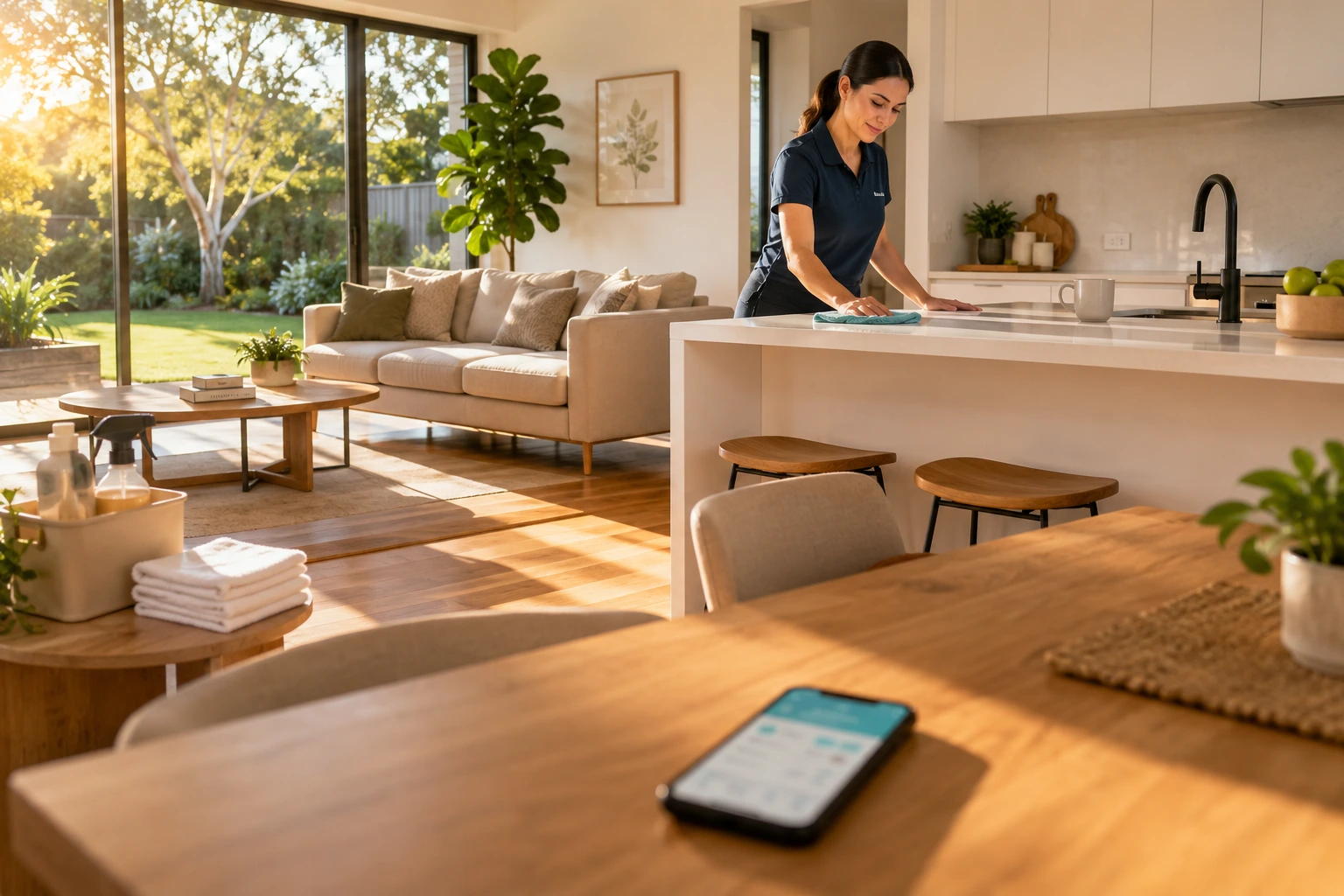
It is one of those questions that sounds simple until you actually try to answer it honestly.
How often should you get your house professionally cleaned?
Ask five people and you will get five different answers, usually shaped more by what they have always done than by what their home and lifestyle actually need. Some people book a cleaner every week and wonder how anyone manages without one. Others get a professional clean twice a year and feel that is plenty. Most people land somewhere in between and quietly suspect they are probably not getting it quite right.
The truth is there is no single correct answer that applies to every household. But there is a correct answer for your household — and it is determined by a specific set of factors that most people have never sat down and thought through properly.
This guide is going to help you do exactly that. Using data from cleaning industry research, insights from professional cleaners, and an honest look at what different households actually need, we will help you work out your personal cleaning frequency — and understand why getting it right matters more than most people realise.
Before we get into the specifics of how often you should book a professional clean, it is worth understanding why this question matters beyond just having a tidy house.
Professional cleaning is not just about aesthetics. It is about what you cannot see. Dust mites, allergens, bacteria, mould spores, and volatile organic compounds accumulate in the home at a rate that casual cleaning consistently underestimates.
Research from the Australian Institute of Health and Welfare highlights that indoor air quality is a significant but often overlooked contributor to respiratory conditions, with dust mite allergens being one of the most common triggers for asthma and allergic rhinitis in Australian homes. A professional clean that reaches deep into carpets, upholstery, and ventilation areas removes these allergens at a level that routine vacuuming simply does not achieve.
For households with allergy sufferers, young children, elderly residents, or anyone with a respiratory condition, professional cleaning frequency is genuinely a health decision — not just a lifestyle one.
Regular professional cleaning extends the life of your flooring, carpets, grout, fixtures, and appliances. Grime and residue that builds up between cleans creates abrasive surfaces that degrade materials over time. The cost of a regular professional clean is almost always significantly lower than the cost of replacing prematurely worn flooring or regrouting a bathroom that was neglected too long.
There is growing body of research linking home cleanliness and organisation to mental wellbeing. A 2019 study published in the Personality and Social Psychology Bulletin found that people who described their homes as cluttered or unclean had higher levels of the stress hormone cortisol throughout the day compared to those who described their homes as restful and tidy. The mental load of living in a home that never quite feels clean — and the cognitive energy spent managing that — is a real cost that most people underestimate significantly.
✅ Key Insight: Professional cleaning at the right frequency does not just clean your home. It removes a category of stress from your daily life that you may not even realise you are carrying.
Your ideal professional cleaning frequency is not random. It is determined by five specific factors that interact with each other to create your household's unique cleaning needs. Work through each one honestly.
�������� Factor 1: Household Size and Composition
The number of people living in your home is the single most direct driver of how quickly dirt, dust, clutter, and bacteria accumulate. More people means more foot traffic, more surface contact, more cooking, more laundry, and more of every type of mess.
Here is a realistic baseline by household size, assuming no other complicating factors:
1 to 2 people, no children → Every 3 to 4 weeks
2 to 3 people with children under 12 → Every 1 to 2 weeks
4 or more people with children → Weekly or fortnightly
Share house with 3 or more adults → Fortnightly at minimum
Single person, rarely home → Every 4 to 6 weeks
Children are a significant multiplier. Toddlers and school-age children generate a level of mess, germ transfer, and surface contamination that meaningfully increases the cleaning load of any household. If you have young children, your baseline frequency should start at least one tier higher than the household size alone would suggest.
�� Pro Tip: If your kids are at the age where everything ends up on the floor, the kitchen bench, or the bathroom walls, fortnightly professional cleans are not a luxury — they are a practical health and hygiene decision.
�� Factor 2: Pets
Pets are one of the most significant variables in household cleaning needs. If you have one or more indoor pets, your cleaning frequency baseline needs to increase — sometimes substantially.
Here is why the numbers are more significant than most pet owners expect:
• A single medium-sized dog sheds the equivalent of a full coat of fur every week across your floors, furniture, and soft furnishings
• Pet dander — the microscopic skin flakes that animals shed constantly — is one of the most potent allergens in the domestic environment and accumulates invisibly across all surfaces
• Pet paw traffic brings in a significant amount of outdoor contaminants including bacteria, pesticides, and garden chemicals that regular foot traffic does not
• Cats, particularly indoor cats, create high levels of dander and fur that concentrate in the areas where they sleep and groom, which is typically everywhere
1 indoor dog or cat, short hair → Every 2 weeks
1 indoor dog or cat, long hair → Weekly
Multiple indoor pets → Weekly
Pets plus allergy sufferers in household → Weekly, sometimes twice weekly
�� Note: If your pet sleeps on the furniture or in bedrooms, add those areas to your professional clean scope explicitly. Pet dander in bedding and upholstery is one of the most common triggers of sleep-disrupting allergies.
�� Factor 3: Allergies, Asthma, and Health Conditions
For households where any member has allergies, asthma, eczema, or a compromised immune system, professional cleaning frequency shifts from a lifestyle preference to a genuine health management strategy.
The most common household allergens that professional cleaning directly addresses include:
• Dust mites and their waste products — the leading cause of indoor allergy symptoms in Australia
• Mould and mildew spores — particularly in bathrooms, kitchens, and any areas with inadequate ventilation
• Pet dander — highly allergenic and extremely difficult to remove without professional equipment
• Pollen tracked in from outside — concentrates on floors, carpets, and soft furnishings
• Cockroach allergens — present in many Australian homes and a significant asthma trigger
If one or more members of your household regularly experiences runny nose, itchy eyes, skin irritation, or worsening asthma symptoms at home, the cleaning frequency of your home is a variable worth examining seriously. Research consistently shows that increased professional cleaning frequency in allergen-heavy households produces measurable reductions in symptom severity.
Mild occasional allergies → Every 2 weeks
Moderate allergies, one sufferer → Weekly
Severe allergies or asthma → Weekly, with specialist deep cleans quarterly
Compromised immune system in household → Weekly minimum, discuss with your doctor
✅ Key Insight: If someone in your household is regularly taking antihistamines or using a Ventolin inhaler at home, the frequency of your professional clean is worth reviewing as a first step before escalating medication.
⏰ Factor 4: Work Hours and Lifestyle
How much time you are actually home, and how you spend that time, directly determines how quickly your home gets dirty and how much capacity you have to manage cleaning yourself between professional visits.
Consider your honest answers to these questions:
• How many hours per week are you and your household members actually home and awake?
• Do you cook at home regularly or mostly eat out and order in?
• Do you work from home, and if so, in which rooms?
• How much entertaining do you do at home — guests, dinner parties, family visits?
• Do you have a regular self-cleaning routine between professional cleans, and do you actually stick to it?
People who work long hours, travel frequently, or have very busy schedules often discover that the gap between professional cleans is longer than their lifestyle actually supports. A high-income household where both adults work demanding jobs, cook regularly, and entertain often may genuinely need weekly professional cleaning even with just two people in residence.
On the other end of the spectrum, someone who works from home with a disciplined cleaning routine and minimal cooking may manage comfortably with a professional clean every three to four weeks.
Work from home, cook daily, regular host → Fortnightly or weekly
Both adults work full time, busy lifestyle → Fortnightly
Rarely home, minimal cooking, tidy habits → Monthly to every 6 weeks
Retired or home most of the time → Every 2 to 4 weeks depending on other factors
�� Pro Tip: If you find yourself cleaning frantically before the professional cleaner arrives, that is a reliable signal that your booking frequency is too low for your actual lifestyle.
�� Factor 5: Home Size and Type
The size and type of your home affects both how quickly it gets dirty and how much effort a thorough professional clean requires.
Larger homes with more rooms, more bathrooms, more floor types, and more surfaces accumulate more dirt in the same period of time simply because there is more surface area for it to settle on. The relationship is not perfectly linear — a five bedroom house does not necessarily get five times dirtier than a one bedroom apartment — but the difference is significant and should factor into your frequency decision.
Property type also matters. Ground floor properties and homes with direct outdoor access accumulate significantly more dirt and outside contaminants than apartments on upper floors. Homes with large gardens, pools, or outdoor entertaining areas introduce additional cleaning complexity.
Studio or 1 bedroom apartment → Every 3 to 6 weeks
2 to 3 bedroom home or apartment → Every 2 to 4 weeks
4 bedroom family home with garden → Every 1 to 2 weeks
Large home, 5 or more bedrooms → Weekly
Now that you understand the five factors, use this guide to work out your personal recommended frequency. Add up the signals from each factor that applies to your household.
You have a large or busy household, pets, allergy sufferers, or a high-use home with demanding lifestyle factors. Weekly professional cleaning is not excessive — it is appropriate for your situation. Think of it as part of your household running costs, like groceries or utilities, rather than an optional extra.
Weekly clients on Cleynce benefit most from a consistent regular cleaner who knows their home and can focus on maintenance cleaning efficiently each visit, rather than spending time re-learning the layout and priorities.
Fortnightly professional cleaning is the most common frequency for Australian families with children or pets and suits the majority of three to four person households well. It keeps the home consistently clean without requiring daily management between visits, and it hits the sweet spot between cost and cleanliness for most busy households.
Fortnightly clients on Cleynce typically combine professional cleans with a light maintenance routine during the week — a quick wipe of kitchen surfaces, keeping bathrooms tidy, and managing clutter — to keep the home feeling fresh between bookings.
Monthly professional cleaning suits smaller households, people who are rarely home, or those with very disciplined self-cleaning routines. It works well when you are consistent and when your lifestyle does not generate high levels of mess, but it requires active maintenance between visits to stay on top of things.
If you are booking monthly and consistently finding the home feels overdue by the time the cleaner arrives, moving to fortnightly is almost certainly the right decision.
Regardless of your regular frequency, there are specific cleaning tasks that fall outside the scope of routine professional cleans and should be scheduled separately. These are not signs that your regular cleaning is insufficient — they are simply different categories of work that require deeper attention on a less frequent basis.
• End of season deep clean: Twice yearly, typically before summer and before winter, to address accumulated grime in areas that regular cleans do not reach — inside appliances, behind furniture, window tracks, ceiling fans, and air conditioning filters
• Post-renovation or construction clean: After any building work, no matter how minor. Construction dust penetrates every surface and requires specialist cleaning to remove properly
• Pre and post event cleaning: Before and after significant gatherings, parties, or family visits to reset the home without consuming your own time and energy
• End of lease clean: If you are renting, a professional end of lease clean is almost always worth doing — it protects your bond and removes the stress of cleaning an entire property to inspection standard yourself
• Post-illness deep clean: After a household member recovers from a contagious illness, a professional clean with disinfection focus reduces the risk of reinfection and clears the home of residual pathogens
�� Note: Outsourcing the big seasonal jobs is common practice, not indulgent. Professional cleaners have the equipment, products, and technique to do in three hours what would take you an entire weekend — and they will do it to a higher standard.
Sometimes the data-informed approach is less useful than just paying attention to what your home is actually showing you. Here are the clearest signals that your current cleaning frequency is not quite right.
• You notice dust on surfaces within a few days of cleaning
• The bathroom feels grimy before the next clean is due
• Pet hair is visible on furniture and floors most of the time
• You are wiping benches and mopping floors yourself between professional visits regularly
• Allergy or asthma symptoms in the household are not well controlled
• You feel embarrassed if someone drops by unexpectedly
• The kitchen has lingering food smells between cleans
• You dread the amount of work needed before each professional clean arrives
• The home feels consistently fresh and clean between visits
• The professional cleaner can maintain rather than reset each visit
• Allergy symptoms are well managed
• You rarely feel the need to clean between professional visits beyond tidying
• You feel comfortable with the home in its between-clean state
• The professional cleaner consistently says the home does not need much work
• You are cleaning extensively yourself between professional visits out of habit rather than necessity
• The home looks almost identical on cleaning day as it did the day after the last clean
• You are rarely home and the house simply does not get dirty at the rate your schedule assumes
Once you have a sense of the right frequency for your household, the conversation you have when booking your clean through Cleynce makes a significant difference to how well the service actually meets your needs.
A good professional cleaner is not just a person who cleans. They are someone with expertise in understanding different home environments and matching their approach to what each home actually needs. The more clearly you communicate your situation, the better the result.
• Your household composition — how many adults, how many children, and their approximate ages
• Whether you have pets and what type — this affects the products and tools your cleaner will bring
• Any allergies or sensitivities in the household — this affects which cleaning products are appropriate
• The areas of the home that get the heaviest use and need the most attention
• Any specific tasks that are priorities for you beyond the standard clean
• Whether there are areas you would prefer the cleaner to avoid or handle with particular care
• Your honest assessment of how quickly the home gets dirty — this helps the cleaner plan their time accurately
�� Pro Tip: The Cleynce booking system lets you add notes and specific instructions directly to your booking so your cleaner arrives already informed about your home. Use this feature — it eliminates the need to repeat yourself every visit and ensures consistency across bookings.
One of the most underrated aspects of getting professional cleaning right is the value of consistency. A cleaner who visits your home regularly develops an understanding of your specific environment — which areas accumulate grime fastest, which surfaces need special care, where pet hair concentrates, how your family uses the space — that allows them to clean your home more effectively and efficiently with every visit.
Through Cleynce, you can request the same cleaner for recurring bookings, building a professional relationship that improves the quality and efficiency of every clean over time. This consistency also means any changes in your home — a new pet, a renovation, a new family member — are communicated once to someone who already knows your home, rather than re-explained to a new face every time.
One of the most common reasons people delay booking more frequent professional cleaning is the perception of cost. But the cost calculation looks very different when you break it down to a daily figure.
A fortnightly professional clean of a three bedroom home in a typical Australian capital city costs in the range of 150 to 250 dollars per visit, depending on the size, location, and scope of the clean. Over a fortnight — fourteen days — that works out to between 10 and 18 dollars per day.
That is less than a cafe lunch. Less than a streaming subscription. Less than the cost of the cleaning products, equipment, and time you would spend doing the same job yourself, particularly when you account for the quality difference between a professional result and a DIY one.
Weekly cleaning of the same property costs more in total but the per-visit cost is often lower because the cleaner is maintaining a consistently clean home rather than resetting a heavily used one each time.
✅ Key Insight: The question is not whether you can afford professional cleaning at the right frequency. For most Australian households, the more honest question is whether the daily cost — often less than a takeaway coffee — is worth the health benefits, the time savings, and the mental load reduction. For most people, it clearly is.
Use this summary to quickly identify your recommended professional cleaning frequency based on your household profile.
Single person, apartment, rarely home, no pets, no allergies Every 4 to 6 weeks
Couple, small home, no children, no pets Every 3 to 4 weeks
Couple, house with garden, one indoor pet Every 2 to 3 weeks
Family of 3 to 4 with children under 12 Every 1 to 2 weeks
Family with children and one or more pets Weekly or fortnightly
Any household with allergy or asthma sufferers Weekly minimum
Large household, 5 or more people Weekly
Home-based worker who entertains regularly Fortnightly to weekly
Any household: add a deep clean Every 3 to 6 months regardless of regular frequency
Working out the right cleaning frequency is the first step. Finding a professional cleaner you trust to deliver consistent, high-quality results at that frequency is the second — and it is just as important.
Cleynce connects Australian households with verified, reviewed professional cleaners who are matched to your specific location, your home type, and your cleaning needs. Every cleaner on the platform is rated by real customers, so you can book with confidence knowing the person coming to your home has a proven track record in exactly the type of clean you need.
Whether you are looking for a one-off deep clean to reset your home, a regular weekly or fortnightly service, or a specialist end of lease or post-renovation clean, Cleynce makes finding and booking the right cleaner simple, transparent, and reliable.
Written by
Alexa Smith

Residential · 9/16/2026
A Detailed, Research-Backed Breakdown of the Real Trade-Offs Between Cleaning It Yourself and Booking a Professional
Unika Subedi
Residential · 9/13/2026
A Realistic, Phase-by-Phase Walkthrough of a Typical Cleaning Appointment, From Arrival to Handover, for First-Time Bookers
Unika Subedi

Residential · 9/11/2026
Share your cleaning requirement in minutes, compare verified providers near you, and pay only for the service you choose.
Fast onboarding
Sign up, set preferences, and start in minutes.
Built for Growth
Whether it's a single booking or multiple sites, manage cleaning requests with ease.
What Perth Households Are Really Paying for Standard, Deep, and Bond Cleans — and the Pricing Red Flags Worth Knowing Before You Book
Unika Subedi