Clynce Support
Online
Clynce Support
The 7 questions worth asking any cleaner before you hire them — insurance, ID, reviews, and what's actually included. A simple pre-booking checklist.
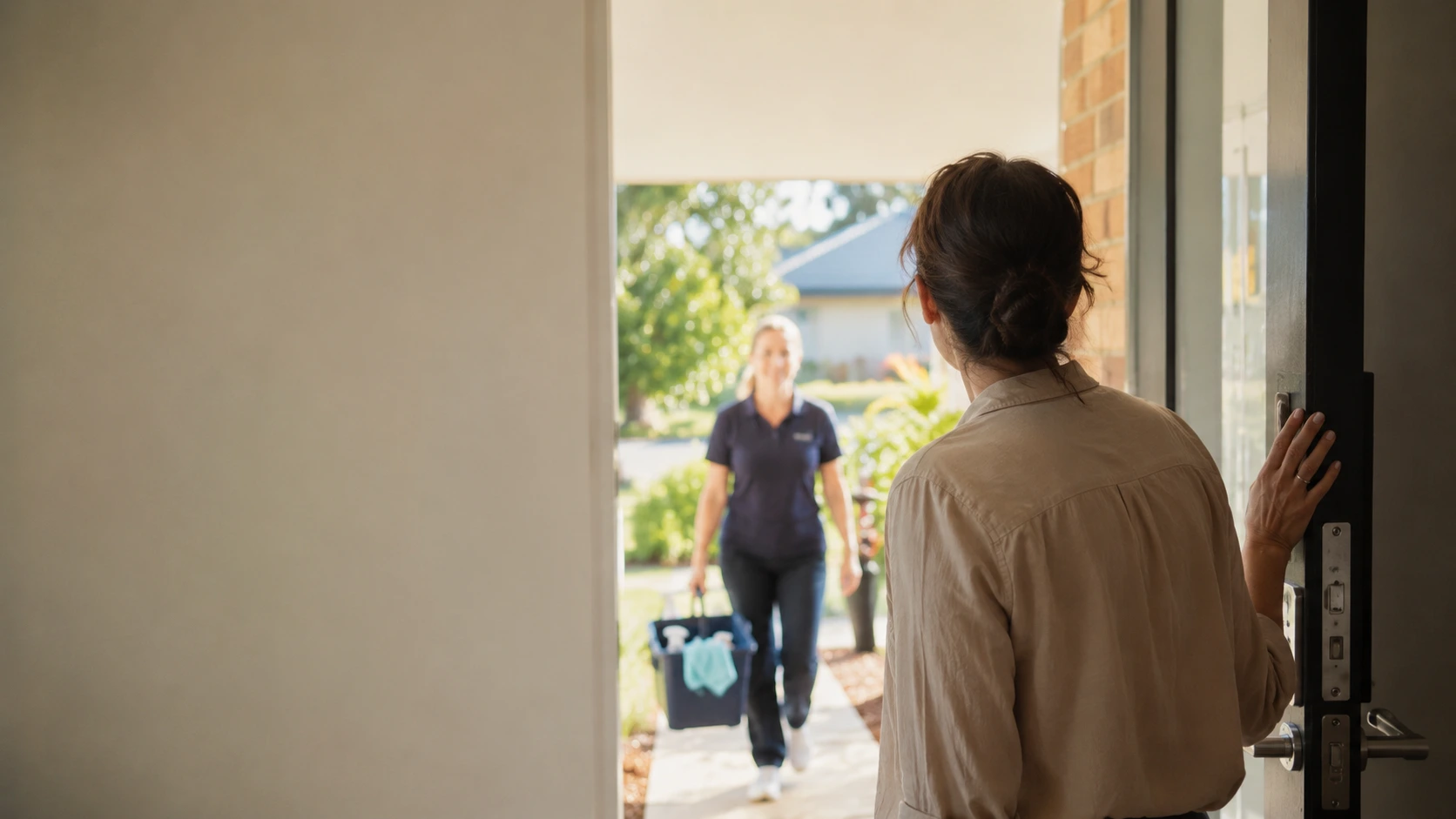
There's a specific, slightly awkward moment that happens right before you hire a cleaner: you're about to hand a stranger a key, an alarm code, or simply the trust of letting them work through your home while you're not there, and some quiet part of you wonders if you should be asking more questions than you actually are.
Most people don't ask, because it feels a bit confrontational — like you're accusing someone of something before they've even started. But the businesses worth hiring expect these questions and answer them easily, because they've been asked before, plenty of times, by people who did their homework. The ones who get flustered or evasive are telling you something too.
Here are the seven questions actually worth asking, why each one matters, and what a good answer sounds like.
None of the questions below are unusual or rude. They're the same basic due diligence you'd naturally apply to any tradesperson working in your home — an electrician, a plumber, a builder. Cleaning somehow gets treated as lower-stakes, maybe because it feels more casual or the price tag is smaller, but the person is still in your home, often alone, often with access to rooms you wouldn't normally show a stranger.
Asking these questions isn't about distrust. It's about making an informed decision instead of an uninformed one — and a legitimate business will never make you feel bad for asking.
This is the single most important question on this list, and the one people skip most often.
Public liability insurance covers you if something goes wrong while the cleaner is working — a broken vase, a damaged floor, a slip and fall. A genuine, established business will answer this instantly, often volunteering a policy number or offering to send a certificate of currency. If the answer is vague, defensive, or changes the subject, that tells you the protection you assumed was there might not actually exist.
What a good answer sounds like: "Yes, we're covered for public liability — happy to send you a copy of our certificate if you'd like one."
Anyone can put together a nice-looking profile with a stock photo and a made-up business name. An ABN is harder to fake, and easy for you to verify independently — the free government ABN Lookup tool takes about thirty seconds and confirms whether a business is real, active, and registered under the name it's using.
What a good answer sounds like: A specific ABN, offered without hesitation, that matches the business name they're operating under when you look it up.
A star rating on its own doesn't tell you much. What matters is the detail underneath it — how many reviews there are, how recent they are, and whether they mention specifics (punctuality, communication, thoroughness) rather than generic one-liners.
Ask specifically for recent reviews, not just a total count. A business with 40 reviews from three years ago and none since tells a very different story to one with steady, recent feedback.
What a good answer sounds like: A link to a profile with a healthy volume of recent, detailed reviews — or specific examples they're happy to point you toward.
This is where a "cheap" quote quietly turns into an expensive one. Ovens, windows, inside cupboards, and skirting boards are common exclusions that don't get mentioned until after you've booked, at which point they show up as an add-on.
What a good answer sounds like: A clear, itemised rundown — "this covers all rooms, bathrooms, and kitchen surfaces; windows and oven are available as an add-on for an extra $X" — rather than a vague "the whole house, basically."
This affects both the price and the result. Some businesses bring everything, professional-grade products included; others expect you to supply it, which can mean anything from your regular supermarket cleaner to a vacuum that's seen better days.
Knowing the answer upfront avoids the mildly frustrating scenario of a cleaner arriving expecting supplies that aren't there — or you supplying products that aren't suited to the surfaces being cleaned.
What a good answer sounds like: A direct answer either way, ideally specifying what's included if they do bring their own products.
For solo operators, this is straightforward. For larger businesses, it's worth knowing whether the person who shows up is an employee (generally covered under the business's insurance and vetting) or a subcontractor (where the arrangement can be murkier, and worth clarifying directly).
This isn't about assuming subcontractors are worse — plenty are excellent — it's about knowing who's actually accountable if something goes wrong.
What a good answer sounds like: A clear explanation of who does the work and how they're engaged, without dodging the question.
This is the question that ties the first one back together. Insurance only matters if there's an actual process behind it — who you contact, how a claim gets lodged, and roughly how long it takes to resolve.
What a good answer sounds like: A specific process — "you'd contact us directly, we lodge it with our insurer, and we'll keep you updated" — rather than a shrug or a vague reassurance that "nothing's ever gone wrong before."
The questions matter, but so does how they're answered. A few patterns worth paying attention to:
You don't need to read this list out like a checklist over the phone. Most of it fits naturally into a normal first message:
"Hi, I'm looking at booking a clean for [date] — could you let me know if you're insured, what's included in the price, and whether you bring your own supplies? Also happy to see a couple of recent reviews if you have a link handy."
One message, three or four of the seven questions answered at once, and it reads as a reasonably informed customer rather than an interrogation. The remaining questions (ABN, who's doing the work, what happens if something's damaged) are easy natural follow-ups once you're already talking.
None of this needs to feel adversarial. The businesses worth hiring want you to ask — it's a chance to demonstrate they're legitimate, and it usually ends the conversation faster than tiptoeing around it would. The customers who skip these questions entirely aren't taking a shortcut; they're just moving the risk to later, usually to the exact moment something goes wrong and there's no clear answer waiting for them.
It's worth noting that this is essentially the same list a verified marketplace checks before a business is ever allowed to quote — insurance, business registration, identity, and a visible review history, confirmed upfront rather than left for you to ask about one message at a time. Whether you're checking this yourself or relying on a platform that's already done it, the underlying question is the same: is there someone genuinely accountable here, before they ever walk through your door?
Written by
Unika Subedi

Residential · 9/16/2026
A Detailed, Research-Backed Breakdown of the Real Trade-Offs Between Cleaning It Yourself and Booking a Professional
Unika Subedi
Residential · 9/13/2026
A Realistic, Phase-by-Phase Walkthrough of a Typical Cleaning Appointment, From Arrival to Handover, for First-Time Bookers
Unika Subedi

Residential · 9/11/2026
Share your cleaning requirement in minutes, compare verified providers near you, and pay only for the service you choose.
Fast onboarding
Sign up, set preferences, and start in minutes.
Built for Growth
Whether it's a single booking or multiple sites, manage cleaning requests with ease.
What Perth Households Are Really Paying for Standard, Deep, and Bond Cleans — and the Pricing Red Flags Worth Knowing Before You Book
Unika Subedi