Clynce Support
Online
Clynce Support
A Myth-by-Myth Look at Common Cleaning Advice, What the Research Actually Supports, and What's Simply Outdated Habit
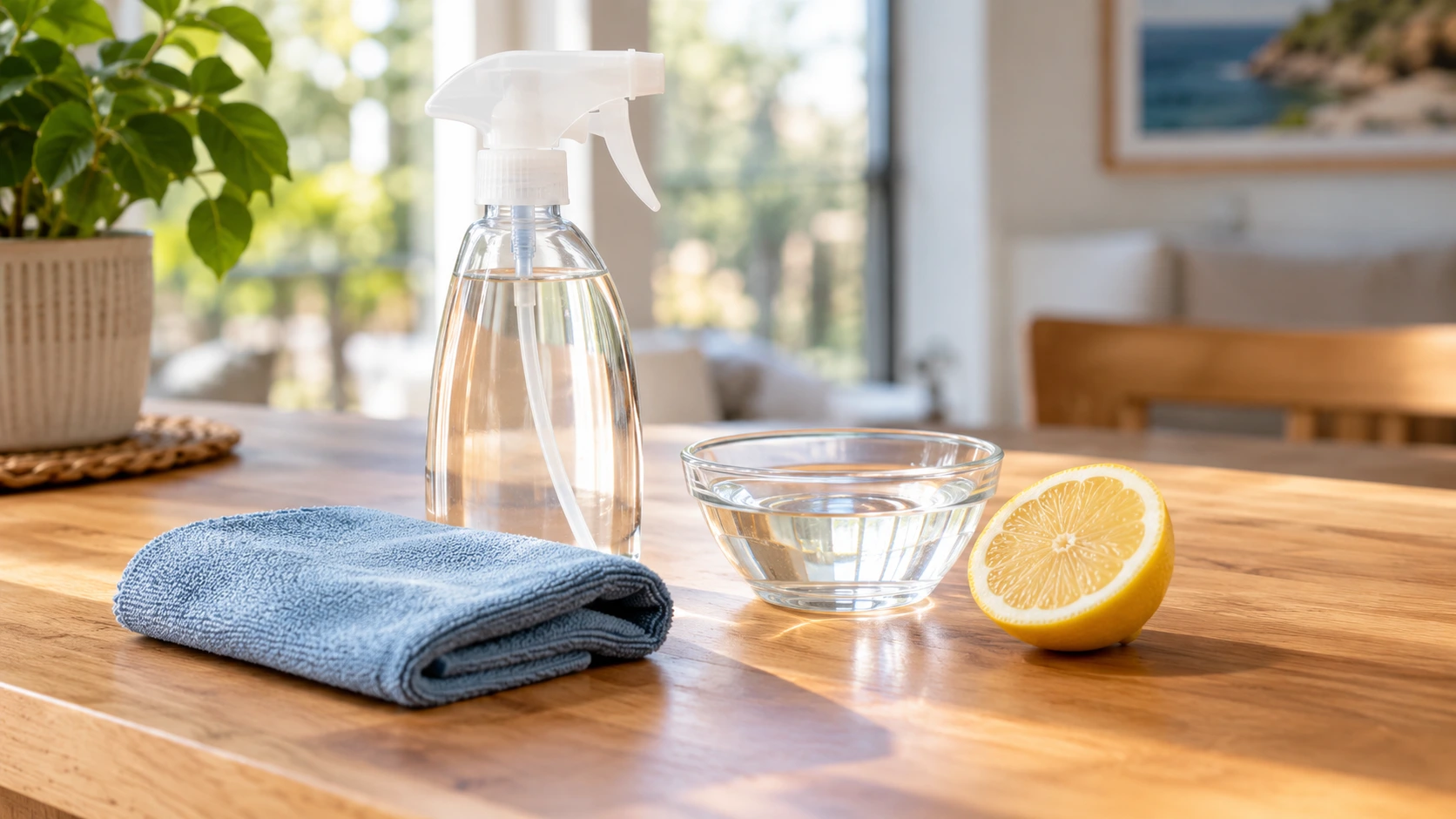
Cleaning advice gets passed down the way most household wisdom does — from a parent, a flatmate, a random tip online — and a surprising amount of it never gets questioned. Some of it holds up. A fair amount doesn't, and a few pieces of "common knowledge" are genuinely worth unlearning, since they either don't work as well as assumed or, in a couple of cases, aren't safe.
Here are seven of the most persistent cleaning myths, checked against what actually holds up — starting with the quick verdict on each, then the reasoning behind it.
The Quick Verdict
Myth | Verdict |
Vinegar disinfects as well as bleach | Mostly false |
Hot tap water alone kills germs | False |
A strong scent means a clean home | False |
More product always means a better clean | False |
If it looks clean, it doesn't need cleaning | False |
It's fine to mix cleaning products for a stronger result | False, and can be dangerous |
Professional cleaning is only needed once things look messy | False |
Myth 1: Vinegar Disinfects as Well as Bleach
● The myth: vinegar is often treated as a natural, all-purpose disinfectant swap for bleach.
● The reality: vinegar is a mild acid, genuinely useful for cutting through limescale and some grease, but it isn't registered or proven effective against the full range of bacteria and viruses that a proper disinfectant addresses.
🔬 Research Research on household disinfectants finds that registered disinfectant products, used with the correct contact time, are required to reliably reduce specific pathogens, and that natural acids like vinegar, while useful for certain mineral and grease-related cleaning tasks, don't meet the same standard for disinfection. |
Myth 2: Hot Tap Water Alone Kills Germs
● The myth: running hot water over a surface or cloth is often assumed to be enough to kill germs on its own.
● The reality: household tap water, even at its hottest, generally isn't hot enough to reliably kill most germs. Cleaning, physically removing dirt and some germs, and disinfecting, killing germs with a suitable product and enough contact time, are genuinely different processes.
Myth 3: A Strong Scent Means a Clean Home
● The myth: a home that smells strongly of a cleaning product is often assumed to be the most thoroughly cleaned.
● The reality: fragrance indicates a scented product was used, not that dirt, dust, or germs were actually removed. Some heavily fragranced products can mask a build-up rather than address it, and can also affect fragrance-sensitive members of the household.
✅ Good to Know For anyone sensitive to fragrance, an unscented or lightly scented product can achieve the same cleaning result without the strong smell often associated with "clean." |
Myth 4: More Product Always Means a Better Clean
● The myth: using extra cleaning product, beyond the recommended amount, is often assumed to produce a more thorough result.
● The reality: excess product frequently leaves a residue behind that can attract dust and grime more quickly afterward. Correct dilution and proper technique generally matter more than sheer quantity.
Myth 5: If It Looks Clean, It Doesn't Need Cleaning
● The myth: a surface or area that appears visually clean is often assumed not to need regular attention.
● The reality: dust mites, bacteria, and in Perth specifically, mineral buildup from hard water, can accumulate well before anything is visible to the eye. A surface can look clean and still benefit from a regular, thorough clean.
Myth 6: It's Fine to Mix Cleaning Products for a Stronger Result
● The myth: combining two cleaning products, particularly bleach with an ammonia-based cleaner, is sometimes assumed to create a more powerful cleaning solution.
● The reality: this combination specifically can produce toxic fumes and is genuinely dangerous. Most cleaning products are formulated to be used on their own, not combined with other chemical products.
⚠️ Watch Out This is one of the few cleaning myths worth treating as a genuine safety issue rather than just an inefficiency — always check product labels and never combine chemical cleaning products without confirming it's safe to do so. |
Myth 7: Professional Cleaning Is Only Necessary Once a Home Already Looks Messy
● The myth: booking a professional clean is often seen as something to do only once a home has visibly fallen behind.
● The reality: much of what a thorough clean addresses, like dust mite buildup, limescale, and accumulated grime in less-visible areas, happens gradually and isn't obvious day to day. Regular maintenance cleaning tends to prevent the deeper, harder, and often costlier, clean that a badly overdue home eventually needs.
Common Questions About Cleaning Myths
Are all "natural" cleaning alternatives less effective than commercial products?
Not universally — some, like vinegar for limescale, are genuinely effective for specific tasks, though not as a universal disinfectant substitute.
Is it ever safe to mix cleaning products?
Generally best avoided unless a product label specifically confirms it. When in doubt, use products separately.
Does a strong chemical smell always mean a product is more effective?
No — effectiveness comes from the active ingredients and correct use, not the strength of the scent.
A Quick Myth-Busting Cheat Sheet
☐ Use vinegar for limescale and light grease, not as a disinfectant substitute
☐ Use a proper disinfectant with adequate contact time for genuine germ-killing
☐ Choose products for effectiveness, not scent strength
☐ Follow recommended product amounts rather than assuming more is better
☐ Never mix chemical cleaning products without confirming it's safe
☐ Keep up a regular cleaning routine, even when a home looks tidy on the surface
Final Thoughts
Most cleaning myths aren't dangerous, just slightly inefficient habits worth updating, with one clear exception worth taking seriously: never mixing chemical cleaning products without checking first. Beyond that, a little accurate information goes a long way toward genuinely better results with less unnecessary effort.
On Cleynce, businesses list their cleaning approach and product use directly on their profile, so you can see exactly what's being used in your home rather than relying on assumptions or old habits.
Written by
Unika Subedi
Residential · 9/7/2026
Homeowners Should Know: What Water Hardness Actually Means for Bathrooms, Kitchens, and the Products Worth Using
Unika Subedi

Residential · 9/4/2026
What Consumer Rights and Local Industry Standards Actually Say About Getting a Cleaning Job Fixed, Refunded, or Redone
Unika Subedi

Residential · 8/31/2026
Share your cleaning requirement in minutes, compare verified providers near you, and pay only for the service you choose.
Fast onboarding
Sign up, set preferences, and start in minutes.
Built for Growth
Whether it's a single booking or multiple sites, manage cleaning requests with ease.
What Seasonal Demand Patterns Reveal About When to Lock In a Booking, and When You Can Safely Leave It Until Later
Unika Subedi